The Earth is a planet characterized by high internal temperature and constantly releases approximately 44 TW (terawatts) of heat. This thermal energy comes mainly from two sources: the natural decay of radioactive elements present in rocks (such as uranium, thorium, and potassium) and the residual primordial heat, accumulated during the planet’s formation approximately 4.5 billion years ago. Among these, radioactive decay represents the main mechanism of heat production within the Earth’s crust.
Heat Distribution
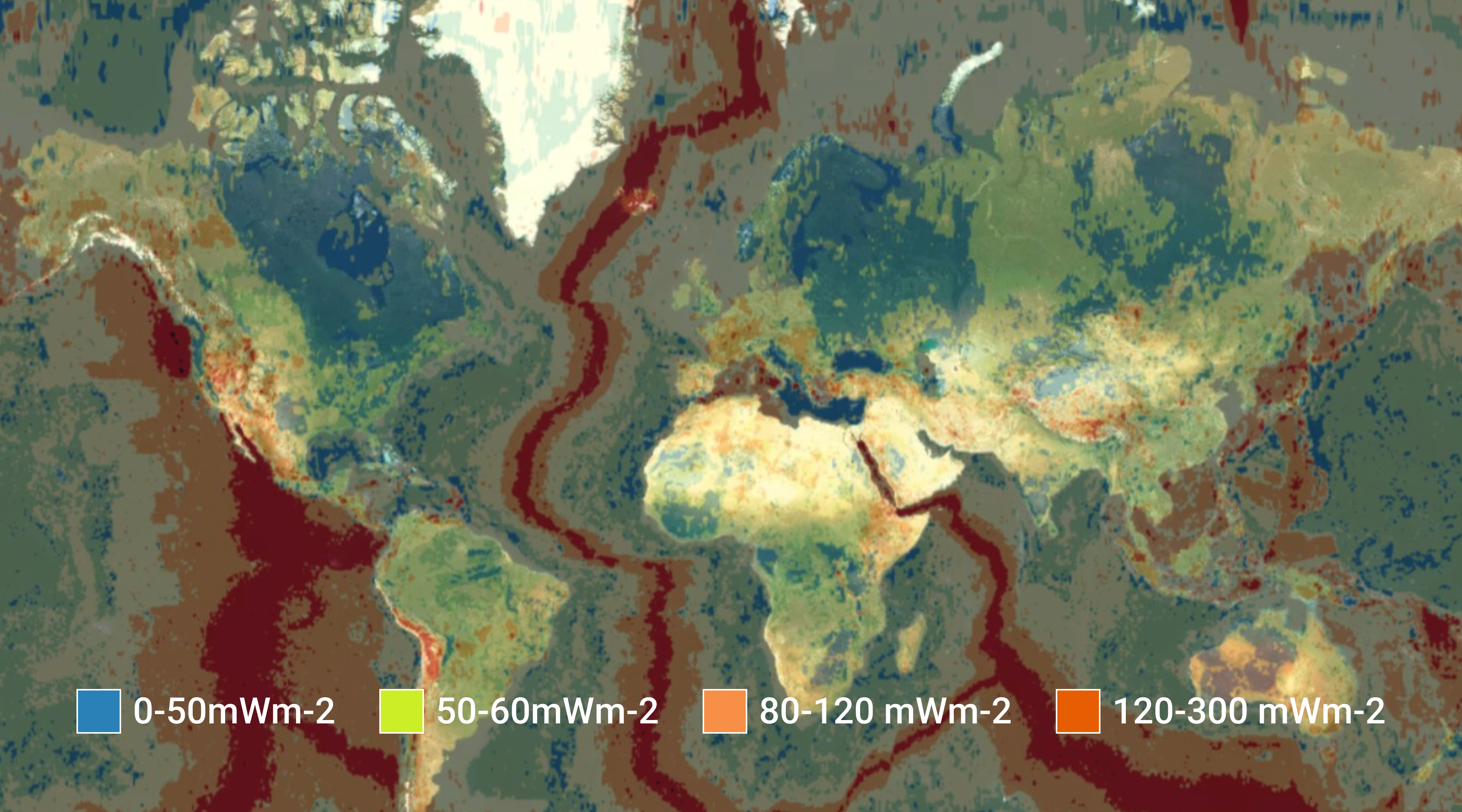
The heat emitted is greater in oceanic areas and lower in continental ones. In particular, we can find high heat flows at the boundaries of tectonic plates where volcanoes arise and most earthquakes originate. The heat emitted by the Earth’s crust is expressed in quantities of milliwatts per square meter (mW/m2).
The average amount of heat emitted by the Earth’s crust is approximately 90 mW/m2.
Heat flow distribution (International Heat Flow Commission)
Temperature
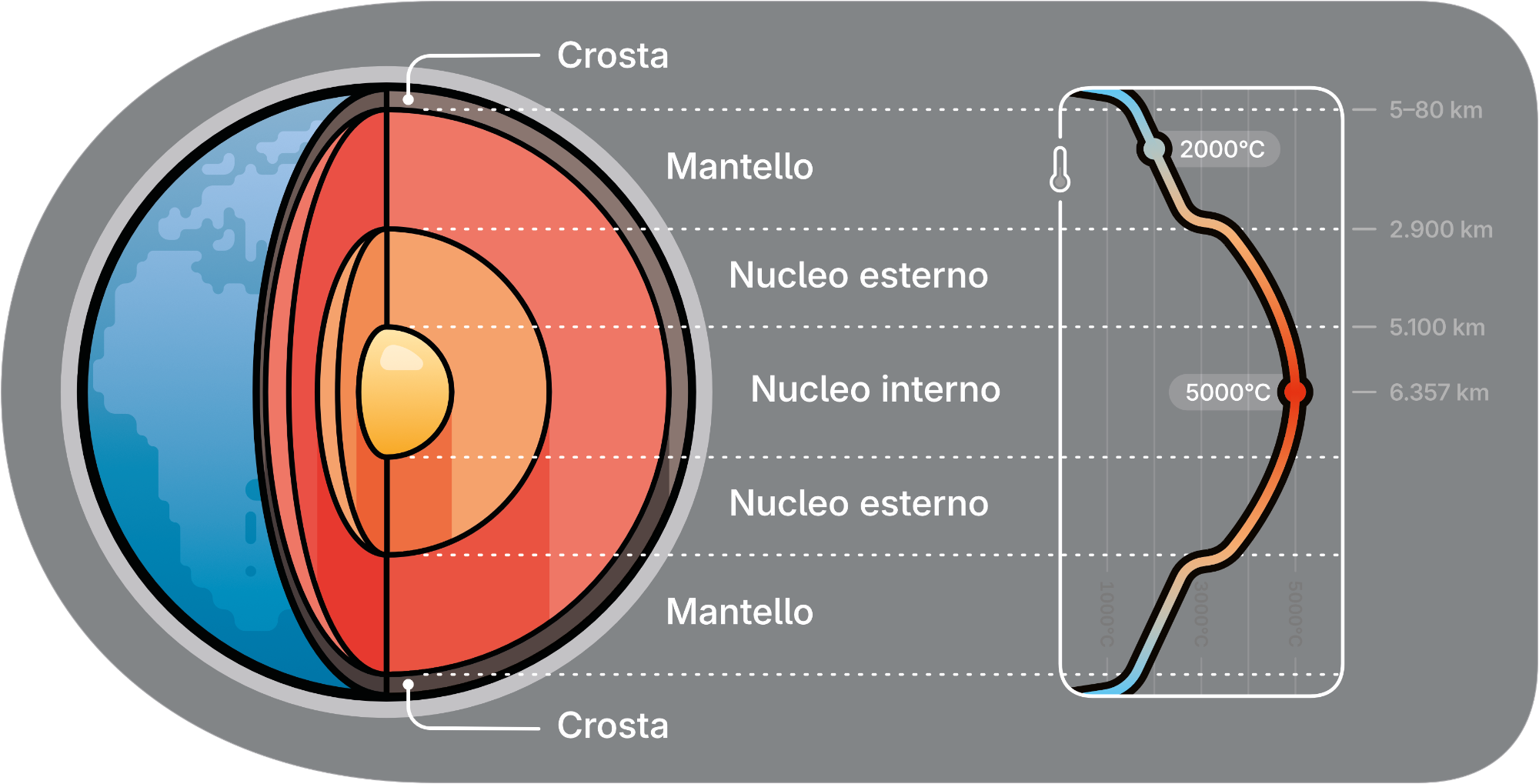
The temperature of planet Earth increases with depth.
In the Earth’s crust it normally increases by approximately 30°C every kilometer (km). In volcanic areas it can be greater than 150°C every km. Volcanoes, earthquakes, but also thermal springs, bubbling pools, geysers and fumaroles, are expressions of the internal heat of the Earth and of the geothermalenergy contained within it.