GEOTHERMAL
SYSTEM
A traditional geothermal system (conventional or hydrothermal) is a geological system with a characteristic structure composed of a heat source (e.g., magma chamber) located thousands of meters deep, above which are permeable rocks rich in liquid water and/or steam (geothermal reservoir), covered by impermeable rocks that allow heat retention. The geothermal reservoir is “recharged” with water thanks to rainwater infiltration that travels over time for kilometers and kilometers. These are the most studied geothermal systems as they were the first to be discovered and used for electricity production starting from the early 1900s.
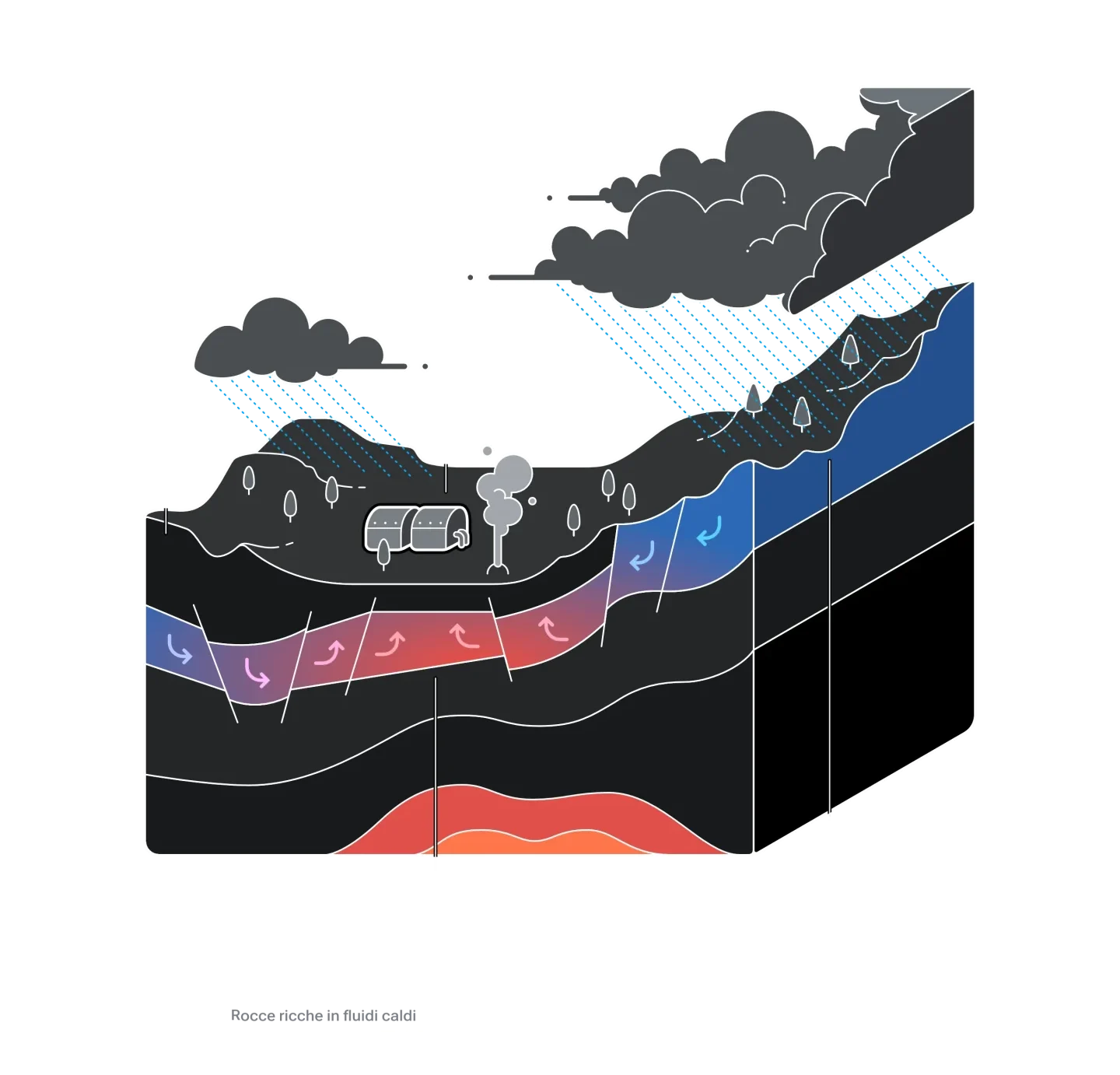
Example of a conventional geothermal system
In addition to traditional geothermal systems, there are also unconventional ones defined this way because they deviate from the conventional structure previously described. Unconventional systems include those enhanced by humans, for example, by increasing the permeability of the “reservoir rocks” that contain the fluids. These systems are known as EGS (Enhanced Geothermal Systems) and are extensively explored and used in Northern Europe and the United States. Other examples of unconventional geothermal systems are those characterized by fluids with extremely high temperatures and pressures (374 ºC, 218 atm) typical of the supercritical state of water, known as supercritical systems, and those characterized by fluids with very high salinity, greater than 10 g/L, called hot brine systems.
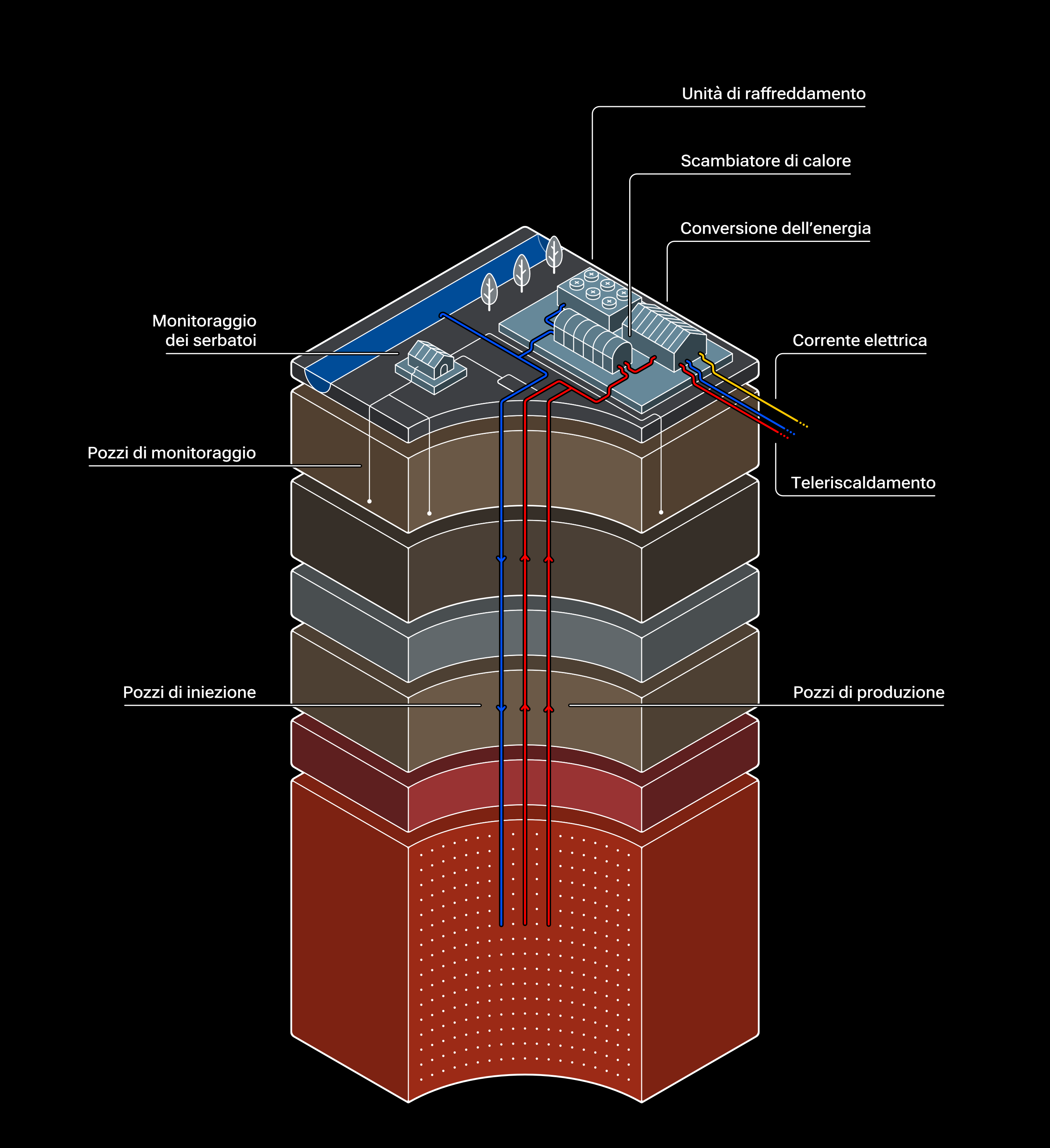
Simplified illustration of an enhanced geothermal system (EGS)